
Closed-cell foam insulation in Sugar Land TX - a sealed attic that keeps damp air out
Hot upstairs and a power bill that climbs every summer usually trace back to the attic. We seal and insulate it with one dense layer.
Request an estimate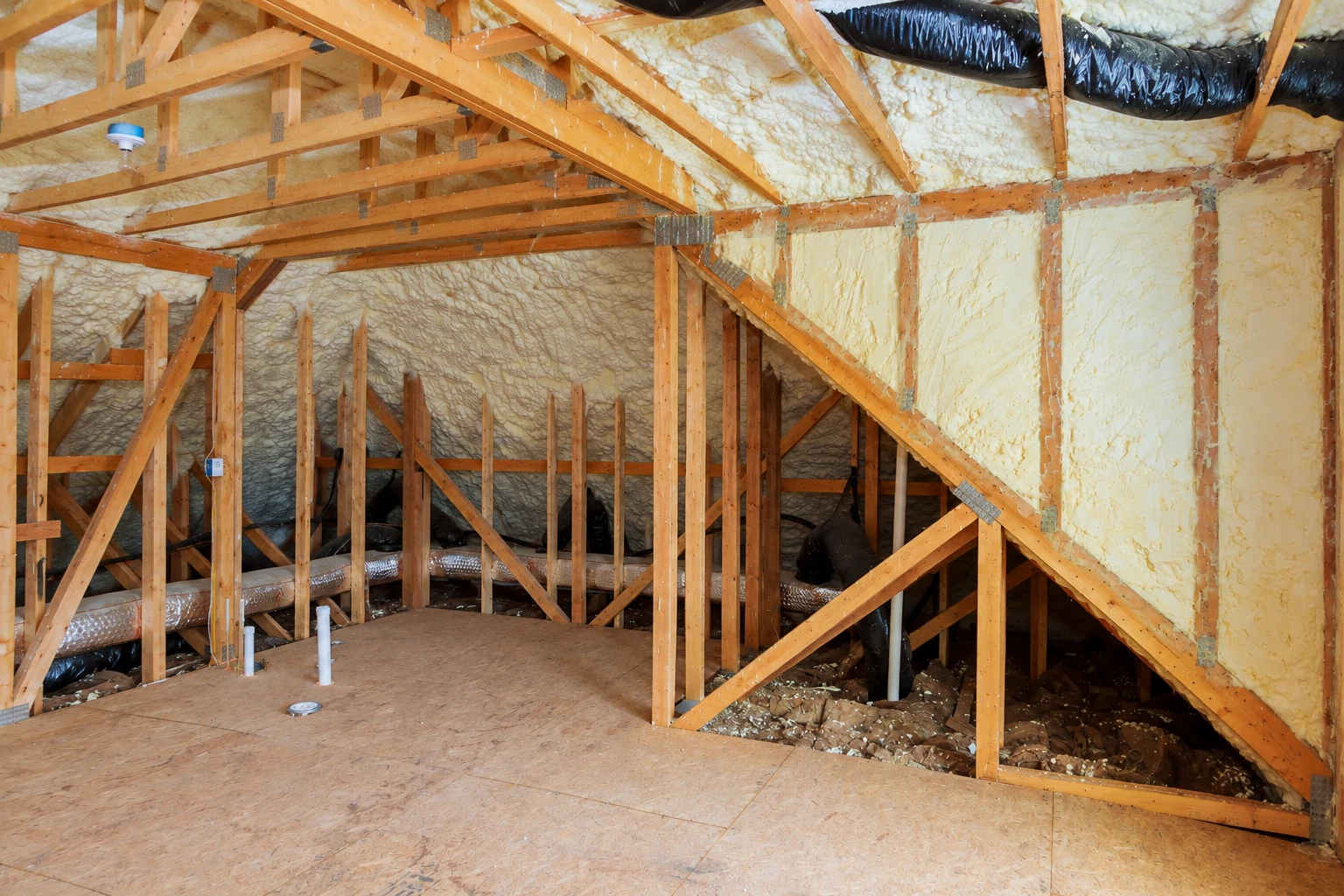
Is closed-cell foam the right insulation for my attic or walls?
Closed-cell foam insulation is a dense, rigid spray foam that we apply under the roof deck or inside the walls of Sugar Land homes, where it insulates, seals air leaks and blocks moisture in one layer.
Most calls I get start with a hot upstairs, a room over the garage nobody can keep cool, or a power bill that climbs every summer. The price turns mostly on how much area we spray and how thick the foam needs to go, plus any repairs or old insulation removal that has to come first. The schedule turns on that same prep and on getting the attic dry and ready before we spray. When I come out, I write an estimate that lists each step we plan, in order, with the figure for your house.
How we install closed-cell foam insulation
I start by looking at the attic or walls with you and writing down what I find, because foam sprayed over a roof leak or over soaked insulation full of droppings just seals the problem in. We fix or clear that first. Then our installers mask off whatever shouldn't get foam, close the gaps around pipes, wires, can lights and the attic hatch, and spray the foam in passes so it builds evenly out to the edges, where coverage tends to run thin. Along with the foam, we plan the moisture side of the job and check whether the foam needs a covering, like a coating or drywall, anywhere it will stay exposed. The quote spells out both, so you know what the whole job includes, and when the work is done I check it with you.
Closed-cell isn't the only foam we spray. Open-cell foam insulation is softer and costs less, and in a lot of attics with no ductwork up there, sealing the gaps and topping up the loose fill does the job for less than either foam. If that's true for your house, I'll tell you. For offices, shops and rentals, our commercial insulation work follows the same order of fix, seal, then insulate.
Closed-cell foam insulation permits in Sugar Land
Before any foam goes on, we check which office covers your address, because some homes near Sugar Land fall under a city and others fall under the county. Inside city limits, building permits run through the city's online portal, where owners can apply, pay and schedule inspections at any hour. The city's Permits Office answers questions about whether a job needs a permit. I don't guess on a foam job, so we ask before we start, and if the work needs a permit, we apply for it and keep you posted on each inspection.
Many houses here have the air handler and ducts in the attic, and long, muggy summers push damp air into every gap, so in those homes I lean toward foam under the roof deck and a clear plan for where the moisture goes. We're based in Sugar Land and see the same setups on jobs in Missouri City and Richmond. If your city isn't listed, call and ask.
Closed-cell foam, up close
Get a closed-cell foam estimate for your attic or walls
We reply to every request within one business day and set a time for me to come look. The estimate is free, done on site and obligation-free, and it lists each step we plan, in order. It helps to tell us whether it's the attic or the walls, and whether anyone at home has asthma or allergies.
(832) 303-7078Closed-cell foam questions from Sugar Land homeowners
Is closed-cell or open-cell spray foam better under my roof in Sugar Land?
Closed-cell foam is the better pick when you want one layer under the roof to handle both heat and moisture vapor, because open-cell foam lets vapor through and can't control it. Closed-cell is rigid and rates about R-6 an inch on the R-value scale, which measures how well insulation slows heat. At its usual thickness it also lets almost no moisture vapor pass. I'll tell you which one your roof needs at the estimate.
How long before we can go back in the house after spray foam insulation?
Plan to be out for at least 24 hours, which is what federal safety guidance tells residents after spray foam goes in. Your re-entry time, the point when it's safe to come back, can run longer depending on the product, the house and whether children or older people live there. We go over that timing before the job is scheduled, so you can plan where the kids and pets will stay.
Does a sealed attic with closed-cell foam need moisture control?
Yes. Once the attic is sealed and brought inside the cooled part of the house, it needs a way to remove moisture, and owners plan that as part of the same project. That's why the moisture plan sits in our quote next to the foam.
How much does closed-cell foam insulation cost in Sugar Land?
Closed-cell spray foam in the Houston area usually costs about $1 to $1.50 per board foot, and a board foot is one square foot of foam one inch thick. Thicker foam means more board feet, so the depth you need moves the price as much as the size of the attic. I'll give you the figure for your house at the estimate, and the work is backed by our satisfaction guarantee.
What is the best way to insulate walls in a hot, humid house?
A federal building guide rates closed-cell foam as the preferred spray foam for walls in hot-humid climates, because it seals air and controls moisture vapor at the outer side of the wall. The same guide says those walls must be left without a vapor retarder on the inside, since a second one could trap moisture in the wall. So skip the plastic sheeting behind the drywall on a foamed wall.
How do I know if spray foam is safe for someone in my house with asthma?
The same federal guidance says people with asthma, respiratory allergies, skin conditions or a past sensitivity to isocyanates, one of the chemicals in spray foam, should review the product information carefully and, if needed, consider other insulation. Tell me at the estimate who in the house has these concerns, and we'll go through the product information together before anyone decides.
Book a closed-cell foam estimate in Sugar Land
Call (832) 303-7078 before work or after dinner, since we're open early and late, seven days a week.