
Blown-in insulation in Sugar Land, TX - even cover over a sealed ceiling
Hot upstairs or a power bill that keeps climbing? We seal the ceiling gaps, then blow in an even layer that covers the whole attic.
Request an estimate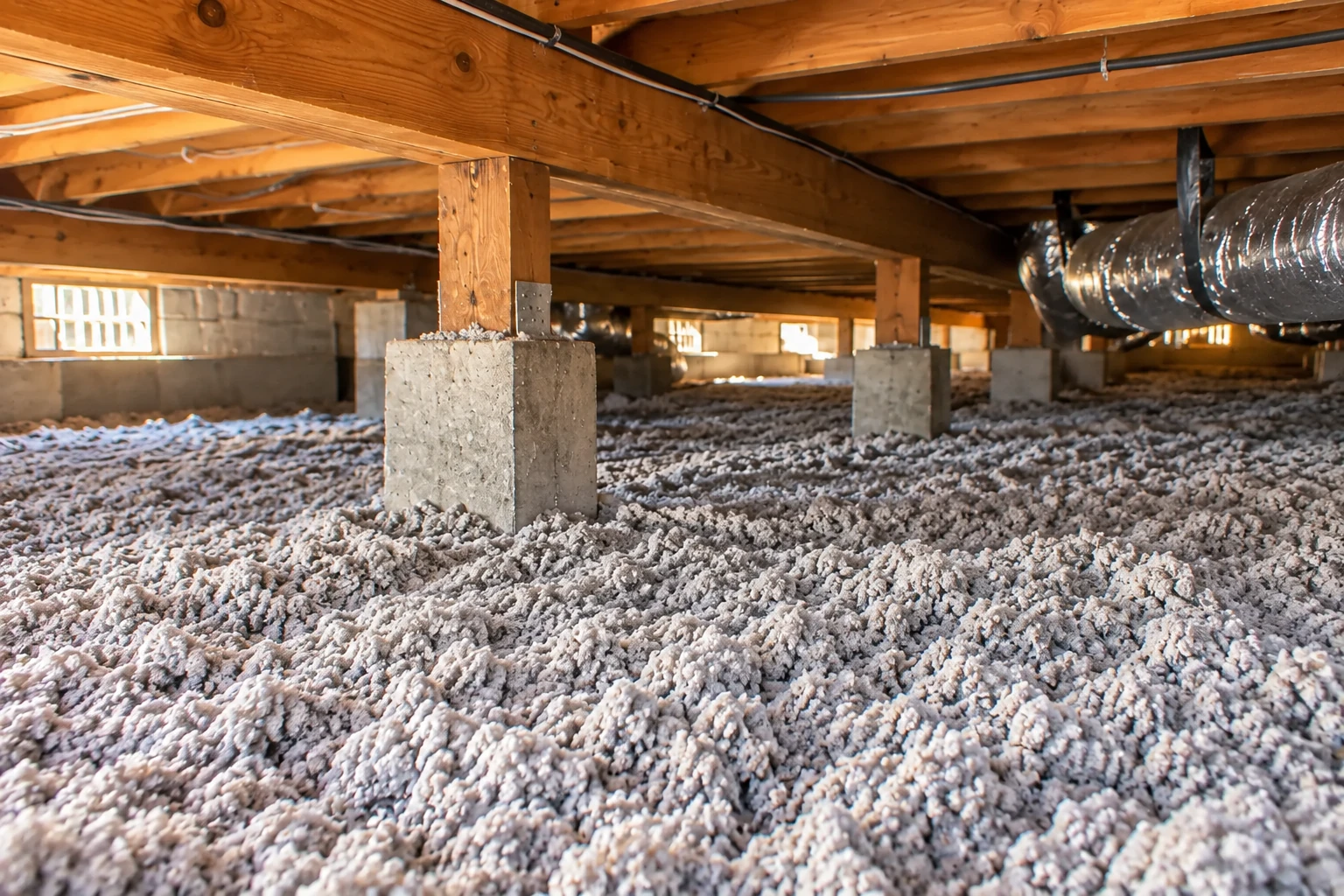
Is blown-in insulation right for my attic?
Blown-in insulation is loose fiberglass, rock wool or cellulose blown through a hose across your attic floor, so it covers the whole ceiling out to the tops of the walls. In Sugar Land, it's usually the simplest way to fix an attic where the cover is thin, patchy or sunk down between the joists.
Most calls start with a hot room upstairs, a room over the garage that never cools off, or an attic nobody has looked at in years. What you pay turns on the size of the attic, the material you pick, how much sealing the ceiling needs and whether old insulation has to come out first. The schedule turns mostly on that last part, since removal and any repairs happen before we blow anything in, and my estimate lists those steps in order so you can see what each one is for.
How we install blown-in insulation
I start by checking what's already up there, how many inches it is, whether it's dry and whether there's a leak or droppings, because those get fixed or cleared before anything new goes in. Then our crew air seals the ceiling, closing the holes around can lights, pipes, wiring and the attic hatch, so the new layer isn't fighting a draft from the rooms below. We fit guards at the eaves so the vents stay open, and we keep insulation off heaters and off light fixtures that aren't IC rated, the maker's mark that a fixture can touch insulation. We blow to an even depth all the way out to the edges, where thin cover is the usual mistake, and when we're done you get the bag labels so you can count what went in.
If the old insulation is soaked, moldy or full of droppings, insulation removal comes first, because new material laid over it just hides the problem. When the attic is only part of why the house runs hot or drafty, we look at the walls, floors and crawl space as part of home insulation.
Blown-in insulation in Sugar Land: permits and the attics we see
Permits for Sugar Land addresses go through the city's Permits Office, and I won't tell you this work skips one until we've checked your address and the scope of the job. We look up whether the city or the county covers your house, and if the work needs a permit, we apply for it and keep you posted on inspections. If you'd rather ask yourself, the city's Permits Office takes calls at 281-275-2270, Monday to Friday from 8 a.m. to 5 p.m. We're based in Sugar Land and work in the cities around it, so if yours isn't listed, call and ask.
A lot of the attics we open here have the air handler and ductwork up top, storage plywood laid flat on the joists and rows of can lights in the ceiling below. Plywood on the joists crushes whatever is under it, so the usual advice is to raise the decking until full-height insulation fits underneath, and we see the same setup on jobs in Stafford and Missouri City.
Blown-in insulation in attics
Get a blown-in insulation estimate for your attic
We reply within one business day to set a time, and I come out to look at your attic and write a free estimate on site that lists each step in order. There's no obligation to go ahead.
(832) 303-7078Blown-in insulation questions from Sugar Land
Is blown-in insulation cheaper than batts?
Usually, yes. Blowing loose fill across an attic floor generally costs less than laying batts and gives better coverage, because it settles around wiring, framing and corners where batts leave gaps. Quotes still vary from house to house, so compare them step by step.
How much does blown-in insulation cost in the Houston area?
Professionally installed blown-in insulation in the Houston area usually costs about $1,050 to $2,100 per job. That's the going market range, not our price, and the per-square-foot cost moves with the type of insulation you choose. Your attic's size, the sealing it needs and any removal decide where you land, and your own figure comes on the estimate after I've seen the attic.
What should happen before blown-in insulation is installed?
Air sealing the ceiling should come before any insulation goes in, and any leak or wet insulation should be dealt with before that. You can ask that a quote list sealing as its own step ahead of the blowing, and ours does.
How long does cellulose insulation last?
Properly installed cellulose can work well for decades, according to the cellulose makers' trade group. The condition is a careful install, which is why the steps before the blowing matter as much as the blowing.
Why does new cellulose insulation look deeper than what was quoted?
In some applications, freshly blown cellulose sits higher than it will once it settles, so a deep layer on the first day is expected. The bag labels we leave are a better count of what went in than a tape measure that day.
Can blown-in insulation touch a chimney or flue?
No, it has to stay clear of them. The cellulose makers' standard practice is blocking that holds the insulation back and leaves an air space around chimneys and flues, and we put that in before we blow.
Book a blown-in estimate in Sugar Land
Call (832) 303-7078 or send the form with your rough attic size, any can lights and any storage up there, so I come out knowing what to look for.